I’d like to preface this by saying that a large majority of this analysis is just my interpretation. I frankly doubt that George Lucas, paragon of feminism (heavy sarcasm), actually considered feminist discourse while writing the Star Wars prequels, but it’s nice to imagine that he did.
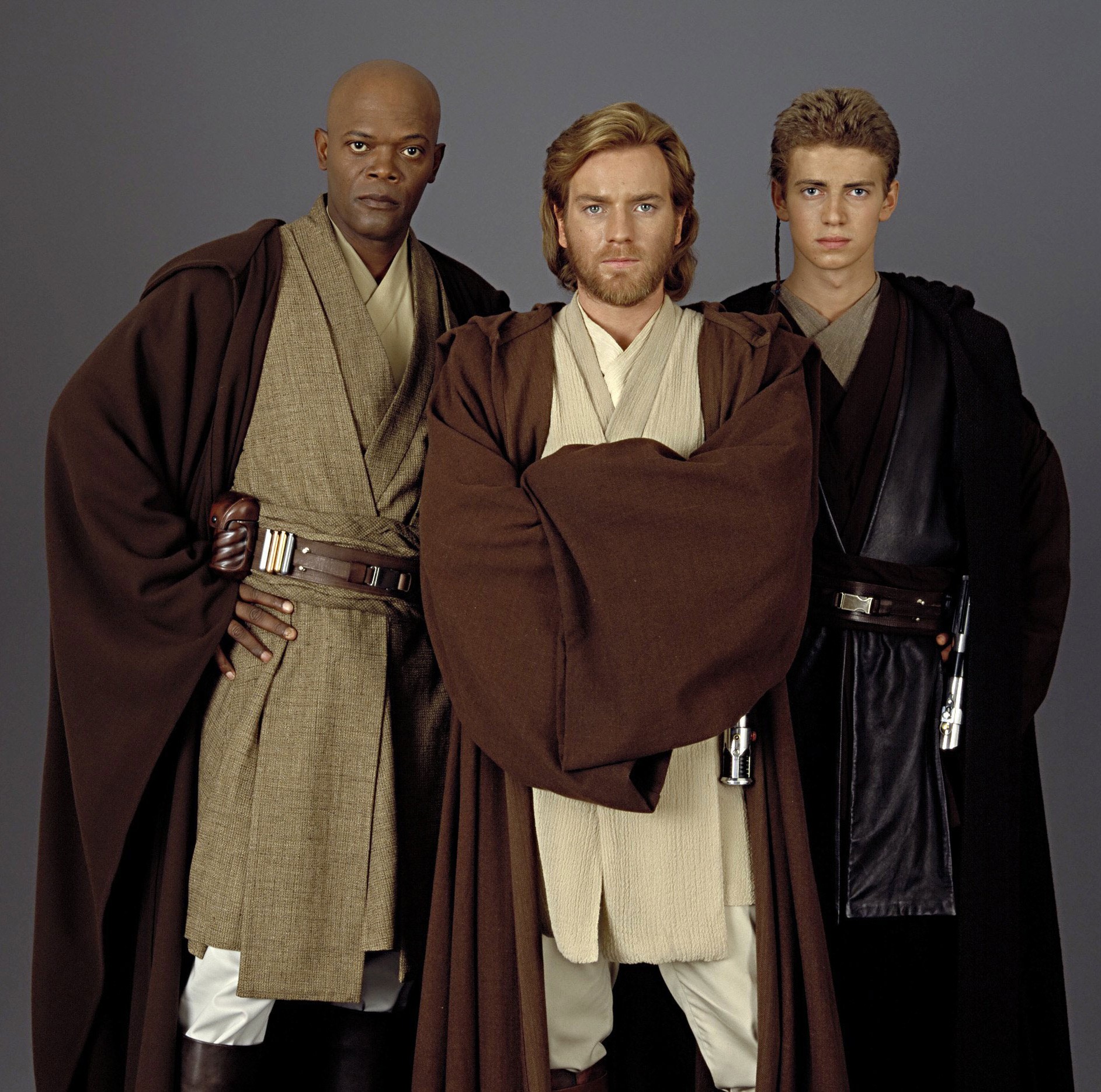
Let’s take a look at the most iconic tragic hero of our age, often referenced in high school English classes in a futile attempt to relate to the Millennials: Anakin Skywalker. What was his fatal flaw—hubris? Jealousy? A lust for power? These ideas have all been looked at extensively, so let’s look instead at what pushed him over the edge: the Jedi Code. We constantly see Anakin agonizing over the rules that he is expected to follow—“I’m not the Jedi I should be,” he says.
Jedi are taught to control their feelings; they are taught that emotional bonds make you weak. They are forbidden to fall in love, and they are forbidden to feel anger or grief. And Anakin, the Chosen One, is expected to embody this philosophy. The inner angst that consumes Anakin is the fear that he’s not a good enough Jedi simply because he doesn’t reach these ridiculously high standards. He’s human! He can’t be expected not to feel emotions, to never feel anger or grief or love—no one can. It is clear how toxic it is for him to suppress these emotions—how it culminates in brash fits of rage and violence, and how it begins his descent into darkness. Really, it’s the Jedi Code’s narrow set of expectations that push Anakin over the edge.
When I think of these unattainable standards, this suppression of emotions that the Jedi are expected to achieve, the first things that come to mind are: “Be a man.” “Real men don’t cry.” The similarities between the expectations of the Jedi Code and the standards that societal gender norms place on men are alarming.
There’s this toxic notion that a man isn’t supposed to be emotional, that he’s supposed to be strong and solid while a weepy woman cries on his shoulder. As if crying and being emotionally vulnerable make you “less of a man.” Hypermasculinity imposes a strict definition of how men should behave; this can result in pent-up anger and violence, and has a real effect on the mental health of men.
I would argue that hypermasculinity plays a role in the reception of the Star Wars prequels as a whole. These films are notorious for their bad reception, and are considered a bit of a joke among hardcore Star Wars fans. But I would say that part of this negative view is due to the fact that they’re films in a genre that is traditionally considered a “man’s world,” and yet they focus on traditionally feminine ideas and themes.
Compared to the original trilogy, there is a clear narrative difference in the prequels. The original trilogy is very much centered on friendship and adventure, and revolves around interpersonal relationships—the most prominent being a father-son relationship. The conflict is external, with a force of evil that is eventually defeated by the hero. These are traditionally “masculine” themes.
In contrast, the prequels are much more focused on internal conflict. The main character frequently shows emotional vulnerability, which is a rare sight in male protagonists. Compared to Han Solo, that personification of bravado and manliness, Anakin’s character really does challenge gender norms. How often do you see the male character in a sci-fi being the romantic and sensitive one in a relationship? And yet Anakin is often interpreted as whiny and overdramatic.
The original trilogy is about adventure and comradery—this belongs to men. The prequels are about romance and heartbreak and vulnerability—this belongs to women. According to society, at least.
For a man to admit that he enjoys these types of films would be to admit to being “unmanly.” This is the same perception of masculinity that has categorized an entire genre of movies as “chick-flicks”—as if movies have genders. So men are more inclined to scoff at the prequels. People laugh at the mushy dialogue (I wouldn’t disagree with you there, but let’s look at the bigger picture) because that’s not what they expect from a male protagonist. It doesn’t help that, on top of this, a huge demographic of the prequel fandom is teenage girls. Of course anything that teenage girls enjoy is automatically looked down upon. There’s that wonderful fragile masculinity again.
So people are just inclined to hate the prequels. And I will admit that there are honest and valid critiques of the prequel trilogy. However, say what you will about the cringe-inducing dialogue, Hayden Christensen’s acting, or the entirety of Jar-Jar Binks, the prequels did one thing right. Returning to the Jedi Code’s black-and-white views, the prequel trilogy is interesting because it introduces complexity into the Star Wars universe. Is the world really split between good Jedi and evil Sith, as the original trilogy would have us believe? If the Jedi are enforcing a toxic philosophy allegorical to sexist gender norms in our world, if they are what push Anakin to the Dark Side, are they truly the perfect force of benevolence? Whether George Lucas intended it or not, the prequels call into question just how good the Jedi really are.
-Contributed by Komal Adeel
 The Spectatorial
Leave a comment