
Even if you’ve never heard of Joseph Campbell, the famous mythologist, you’ll likely recognize the shape of the Hero’s Journey. In simple terms, the hero of many mythological traditions begins as an ordinary person who is called to adventure by an out-of-the-ordinary event. Said hero may be unwilling or unsure at first, but ultimately leaves home on a quest.
Heroes, through their quests, grow and change before returning home to lead their people, or to live as wiser beings. The Hero’s Journey is often used as the basic structure of coming-of-age tales; it’s a grand tradition that taps into our cultural need for stories that teach us how to grow up.
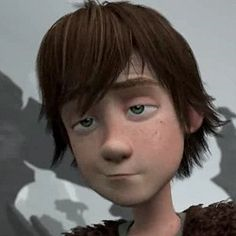
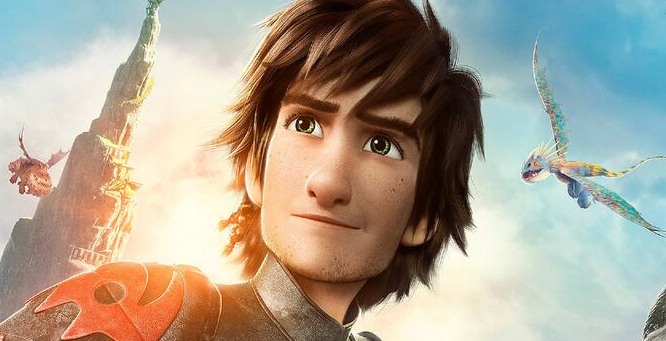
The movie How to Train Your Dragon and its recent sequel, How to Train Your Dragon 2, both draw on the Hero’s Journey paradigm. However, while the original movie breaks away from the traditional Hero’s Journey story in interesting ways, the second movie falls back on the familiar form.
As a family-friendly kids’ movie HTTYD2 has a generous helping of the commonplace themes that we serve with every story we market to children. It reinforces the importance of friendship (it’s magic, I’m told). It emphasizes the importance of family, and we watch Hiccup’s dad, Stoic, and long-lost mom, Valka, get back together in a Parent Trap worthy plot twist. Both movies also include strong “be yourself” messages, which are common in animated stories produced for children.
In the original movie HTTYD Hiccup changes his home village, Berk, for the better by trying to understand dragons, learning about them, and training them. This approach to the local wild dragons is something that has never been done before. His observations of Toothless break the taken-for-granted dragon lore that he, and every other young Viking, is taught.
Most of his fellow Vikings adhere to the warrior traditions that Hiccup cannot fit into and must overcome. He uses his intelligence to develop various contraptions that serve his purposes (first catching an elusive night fury dragon, then training and riding that dragon). Hiccup does this because he cannot rely on brawn, as his father and teacher do. He is small and cannot swing an axe with any kind of ease or precision. His inventions, along with the techniques for taming and training dragons, are integrated into daily life in Berk by the end of the first movie.
It is worth noting that Hiccup learns to train a dragon all on his own. Traditionally, a hero who has accepted a quest is assisted either by a supernatural being (such as Baba Yaga) or is guided by a wise teacher (think of every bearded mentor ever: Gandalf, Obi Wan Kenobi, Dumbledore, etc). Young Hiccup has neither a fairy god mother nor a mentor figure; he forges his path entirely on his own, through much trial and error. This is another unique aspect of the HTTYD story.
How to Train Your Dragon 2 is far more traditional. It touches on the very common desire to find one’s place in the world: Hiccup explores the islands beyond Berk with Toothless. The theme of independence is suggested by his mother’s self-made home among wild dragons. Sadly, both of these themes are thoroughly quashed by the movie’s plot.
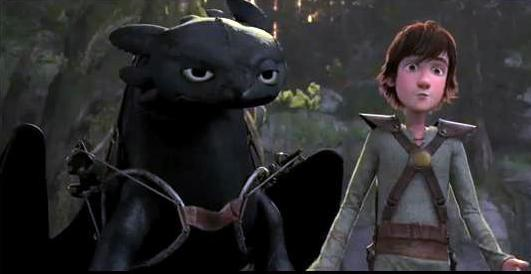
In the sequel Hiccup must uphold those same traditions that he previously overcame and step into his fallen father’s role as the new hereditary chief of the Viking village. Worse, Hiccup’s fascination with and deep understanding of dragons is presented as a trait he inherited from his mother. This doesn’t quite undermine his character development in the first movie—but it does make it less meaningful.
In short, Hiccup steps into his destiny, fulfilling the final part of the traditional Hero’s Journey. He stops being different.
Hiccup’s previous journey and character development are what made the first movie so powerful. Hiccup had to make his place in the Viking world because he didn’t fit in like a puzzle piece, while his peers did. He becomes the first Viking to ride a dragon because he can’t kill them like every Viking who came before him. He becomes an inventor, a sharer of knowledge, and the catalyst for change. In HTTYD Hiccup becomes the Viking equivalent of an entrepreneur, an innovator and a trail-blazer.
In the sequel he simply steps into the role of chief—like every chief’s son before him.
The character development of Valka similarly retrogrades. She goes from a free, self-determined life to returning to the life she left behind in the first place. Before we meet her, she is, naturally, a wife and a mother. When Hiccup and his father are reunited with her, she is very quickly integrated back into that traditional role.
Her reverse transformation combined with Hiccup’s regression of character work to make the entire sequel a far more conservative story than the first movie. More importantly, HTTYD2 missed out on a perfect opportunity to break the traditional Hero’s Journey narrative formula and create a popular, fun story that prepares children for the contemporary world. What could have remained a uniquely contemporary story has now become merely traditional.
Why does the plot of a kids’ movie matter? Many will argue that it doesn’t, but those who do so are refusing to remember or acknowledge the way that stories affect us as we grow up.
In a world where the economy is unsteady and old ideas about professions are fading fast (particularly job security and the path to a stable career), children do not need another story about restoring the status quo. There isn’t a reliable status quo right now; the common narratives about how to grow up and shape your life are increasingly out-of-date. The idea of “destiny” is archaic and a story about a hero stepping into his destined place is no longer a psychologically useful story.
Today it is far more psychologically useful to be exposed to stories about heroes who are innovators, the first to try something new, or to think differently. The world is changing and we can’t keep fighting the same old battles that our ancestors fought. Many of today’s dragons can’t be slain.
-contributed by Miranda Whittaker
 The Spectatorial
Leave a comment